
Sha Na Na
at Woodstock 1969
Twelve Columbia University students in gold lamé suits performed 35 minutes of 1950s doo-wop immediately before Jimi Hendrix — and helped ignite the nostalgia wave that gave America Happy Days, American Graffiti, and Grease.
Sha Na Na — Woodstock 1969
By 7:30 on the morning of Monday, August 18, 1969, Woodstock was nearly over.
Janis Joplin had closed Saturday night. The Who performed "Tommy" in its entirety at 5 a.m. Jefferson Airplane played as the sun came up on Sunday. Three hundred thousand people who were still on Max Yasgur's farm were exhausted, mud-caked, and largely asleep.
Then twelve young men in gold lamé suits and leather jackets walked out from the wings.
They were Sha Na Na. Columbia University students who had been performing together for less than six months. No record deal, no album, no touring history. What they had was 35 minutes of 1950s doo-wop and rock and roll — and a slot on the bill that Jimi Hendrix had personally helped arrange, immediately before Hendrix himself.
Born at Columbia
The story of Sha Na Na does not begin in Greenwich Village or a San Francisco garage. It begins in the hallways of an Ivy League university in upper Manhattan, during one of the most politically charged years in the university's history.
Columbia had been rocked in April 1968 by a student occupation that shut down the campus for weeks. Students protesting the university's ties to Vietnam War research occupied five buildings; police arrested more than 700 of them. The year 1969 arrived with the campus still tense.
George Leonard was a humanities graduate student who watched it all. His response was not a protest song. He proposed transforming his younger brother Robert's established a cappella group, the Columbia Kingsmen, into a theatrical revival act performing rock and roll from the late 1950s.
Leonard's concept was precise — not a loose tribute act but a choreographed, vaudeville-style show with tight formations and total commitment to the era's sound and look. Gold lamé suits. Leather jackets. Hair greased into pompadours and ducktails. The name came from the nonsense syllables in "Get a Job" by the Silhouettes — "sha na na na, sha na na na na" — the 1958 doo-wop hit that defined the idiom they were reviving.
Their debut was an "oldies night" at Columbia's Willman Auditorium in spring 1969. The audience was students who had grown up with this music — their own childhood, barely ten years gone, performed back at them with theatrical precision. The response was immediate. Within weeks, they were playing Manhattan clubs.
How Jimi Hendrix Got Them to Woodstock
Steve Paul's Scene was a basement club on West 46th Street where rock royalty gathered in 1969. Led Zeppelin played there during their first American tour. Janis Joplin was a regular. Jimi Hendrix came when he was in town.
Sha Na Na started playing the Scene. The gold lamé and greased hair stood out in a room full of paisley and fringed leather. Hendrix was drawn to them. He went to Woodstock promoters Michael Lang and Artie Kornfeld and pushed them to come see the group.
Lang came. He booked them.
Five months after George Leonard walked into the Columbia Kingsmen with his idea, twelve students were on the Woodstock bill as the second-to-last act of the entire festival, slotted immediately before Hendrix.
The Sunrise Set
Their 35-minute set opened around 7:30 in the morning. Most of the crowd was asleep or close to it. The sun had not fully cleared the tree line. The four acts before them had played through the night.
They opened with their theme and moved through "Jakety Jak," "Teen Angel," "Jailhouse Rock," "Wipe Out," "Who Wrote the Book of Love," and "Duke of Earl." Jon "Bowzer" Bauman later recalled that the initial reaction was bewilderment — hippies in the mud watching men in gold suits doing choreographed moves to songs from 1957.
The bewilderment did not last. "At the Hop" earned a standing ovation. They were brought back for an encore.
Jimi Hendrix walked on stage as they walked off.
Michael Wadleigh's Woodstock documentary included their footage in the final cut. The film opened in theaters in March 1970 and was seen by millions. Twelve students from Columbia had become nationally known.
The Wave They Helped Set in Motion
Their Woodstock performance landed at a specific cultural moment. The optimism of the mid-1960s had run its course. Vietnam ground on. Altamont would happen four months after Woodstock, closing the decade on a violent note.
What Sha Na Na offered at Yasgur's farm was music from before any of it. Songs from 1957 and 1958 — simple, exuberant, unambiguous — performed with full theatrical commitment by students who had grown up in the wake of that era.
They were among the first signals of what followed in American pop culture. George Lucas's American Graffiti (1973), set in 1962 small-town California, grossed over $115 million on a budget of $777,000. Happy Days premiered on ABC in 1974 and ran for eleven seasons. The Broadway musical Grease, which had opened in 1972, became a 1978 film starring John Travolta — the highest-grossing movie musical of the decade.
Sha Na Na appeared in Grease as "Johnny Casino and the Gamblers." Their member Screamin' Scott Simon co-wrote "Sandy" for the film.
The Television Years and What Came After
Their syndicated variety show ran from 1977 to 1981 — 97 episodes that at its peak became the number one syndicated program in America. Jon "Bowzer" Bauman, known for his muscular pose and catchphrase "Grease for Peace!," was the face of the show. It introduced doo-wop revival to a generation that had been children when Sha Na Na played Woodstock.
The original Columbia members followed paths that would surprise anyone who knew only the gold lamé. Robert Leonard became a forensic linguistics professor at Hofstra University. George Leonard went into interdisciplinary humanities at San Francisco State. Alan Cooper became provost at the Jewish Theological Seminary. Elliot Cahn became Green Day's first manager. Frederick Greene earned a degree from Yale Law and became a vice president at Columbia Pictures. Henry Gross had a solo hit in 1976 with "Shannon," which reached number six on the Billboard Hot 100.
Sha Na Na has continued performing for five decades, appearing at classic rock venues and Woodstock anniversary events. Their story remains singular: twelve Ivy League students in gold suits performing doo-wop for hippies at dawn, right before Hendrix, at the most famous concert in rock history.
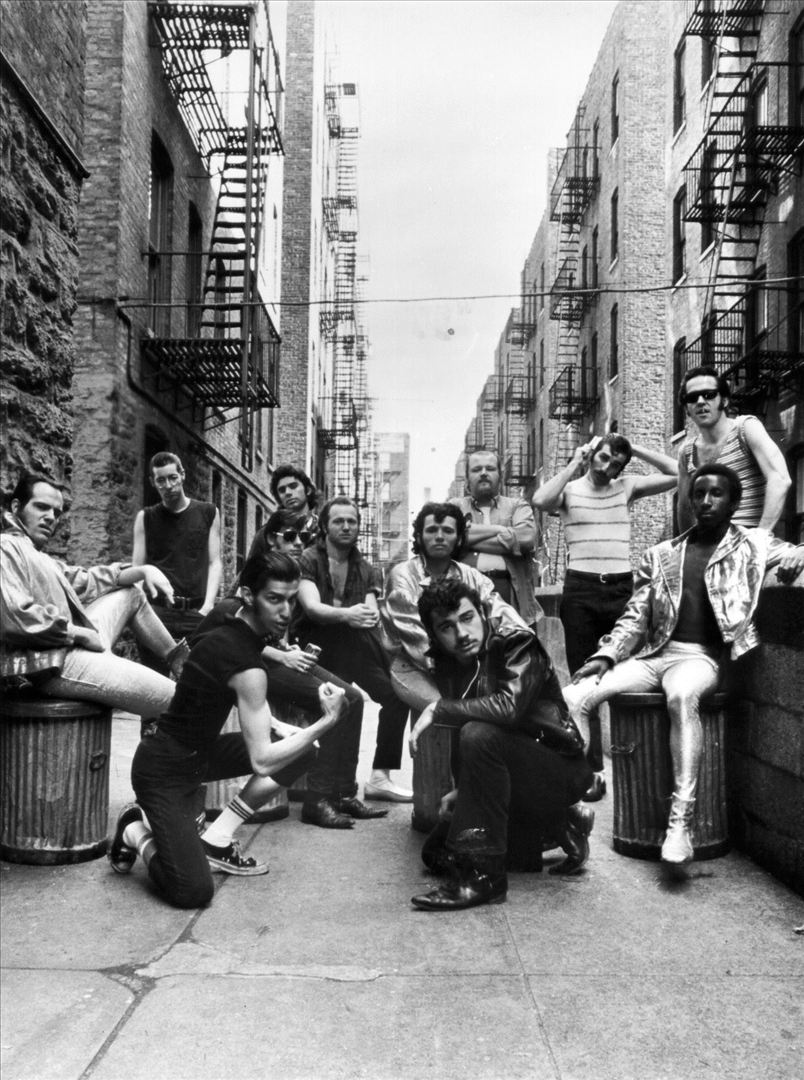
Sha Na Na, 1972 — Photo: William Morris Agency (public domain)